
Student Housing · UK Guide
From finding your first house share to protecting your deposit and knowing your rights under the new Renters’ Rights Act 2025. Everything you actually need before you sign.
Most students spend first year in halls. Then, usually around November or December, the conversations start.
Who are you living with next year? Have you found anywhere? Suddenly you are being asked to commit to a 12-month tenancy with people you have known for about eight weeks. It is a lot.
This guide covers every stage: finding a property, understanding your contract, protecting your deposit, knowing your rights, and dealing with the things that go wrong.
It also covers the important changes introduced by the Renters’ Rights Act 2025, which significantly changed the rules for private student tenancies in England from May 2026.
Note on devolved housing law: Housing law differs between England, Scotland, Wales and Northern Ireland.
This guide focuses on England unless stated otherwise. If you are studying in Scotland, check mygov.scot. In Wales, see Rent Smart Wales.
At a glance: the key things every student renter needs to know
| Issue | What you need to know | Type |
|---|---|---|
| Deposit cap | Maximum 5 weeks’ rent under the Tenant Fees Act 2019 | Must know |
| Deposit protection | Should be registered in a government-approved scheme within 30 days | Must know |
| Tenancy type (England, from May 2026) | Fixed-term assured shorthold tenancies (ASTs) are generally abolished. Most new private tenancies are now rolling monthly | Must know |
| Section 21 evictions | Abolished under the Renters’ Rights Act 2025. Landlords must now give a legal reason to evict | Your right |
| Leaving early (private house or HMO) | You can generally give 2 months’ notice at any time on a rolling tenancy from May 2026 | Your right |
| Landlord access | At least 24 hours’ written notice required except in genuine emergencies | Your right |
| Pets | Landlords must not unreasonably refuse a pet request under the new Act | Your right |
| Guarantor | Almost all student landlords require one. Usually a parent or guardian | Must know |
| Council tax | Full-time students are exempt but must apply with proof of enrolment | Useful tip |
| Inventory | Document everything on move-in day with photos. Date-stamped evidence protects your deposit | Useful tip |
| Joint tenancy liability | All tenants are jointly responsible for the full rent if one person does not pay | Must know |
Finding a Property
The best properties go fast. In most university cities, students begin looking in October and November for the following September.
That feels absurdly early when you have only just unpacked, but waiting until January or February in popular areas like Manchester, Leeds, Bristol or Nottingham means the better houses are already taken.
Where to look:
- University accommodation offices often list approved or recommended landlords and can flag those with known complaints.
- Local letting agents that specialise in student lets. Register with several to maximise your options.
- Rightmove and Zoopla both list student-friendly private rentals.
- Unipol is a student housing charity operating in Leeds, Bradford and Nottingham. Properties listed with them meet a code of standards.
- Facebook groups and student union noticeboards can surface private landlord listings not on the main portals.
Tip: See at least three or four properties before you commit. It is very hard to judge what reasonable looks like until you have something to compare it to. Take photos during viewings and note anything that looks damp, mouldy or poorly maintained.
Understanding the New Rules: Renters’ Rights Act 2025
This is the big one. The Renters’ Rights Act 2025 received Royal Assent in October 2025 and its main provisions took effect from 1 May 2026.
It is the most significant change to private renting in England in decades, and it directly affects students renting privately.
Important: The rules below apply to England only and cover the position from 1 May 2026 onwards.
If you signed a tenancy before that date, your landlord should have sent you an Information Sheet by 31 May 2026 explaining how your tenancy is affected.
If you did not receive one, contact your Students’ Union or Shelter.
The Act is still being interpreted in practice so always get advice from your SU housing team or Shelter before making decisions based on it.
Quick summary: what the Act changes for students
| What | Before May 2026 | From May 2026 |
|---|---|---|
| Tenancy type | Fixed-term AST (e.g. 12 months) | Rolling periodic tenancy (no fixed end date) |
| Leaving early | Bound until end of fixed term unless break clause | 2 months’ written notice at any time |
| Eviction without fault | Section 21 allowed | Abolished. Landlord needs a legal reason |
| Rent increases | Varied by contract | Once per year via statutory process only |
| Pets | Often refused | Landlord must not unreasonably refuse |
What changed for private house and flat rentals (HMOs)
If you rent a room in a shared student house, this is the type of accommodation most affected. Under the Act, fixed-term assured shorthold tenancies are generally abolished.
Your contract is typically now a rolling periodic tenancy with no fixed end date. In broad terms this means:
- You can usually leave at any time by giving your landlord two months’ notice in writing.
- Your landlord cannot evict you without a specific legal reason as Section 21 no-fault evictions are gone.
- Landlords of HMOs (shared houses of 3 or more people) can still use a new possession ground called Ground 4A to regain the property at the end of the academic year, but only if they told you about this at the start of the tenancy and gave you at least four months’ notice.
How these rules apply to your specific tenancy may depend on its exact terms and when it was signed.
Always check with your SU housing adviser.
What this means if you rent a studio or one-bed flat privately
Landlords of one and two-bedroom properties generally cannot use Ground 4A. Your rolling tenancy typically continues until you choose to leave or the landlord demonstrates a specific legal ground in court.
This is a significant strengthening of tenant rights compared to before May 2026.
University halls and purpose-built student accommodation (PBSA)
University-owned halls are not affected by the Act and can still use fixed-term contracts.
Private PBSA (such as Unite Students or similar blocks) is also largely exempt, provided the provider is registered with a government-approved code of practice (the ANUK/Unipol Code).
Check whether your provider is registered before assuming the exemption applies.
Types of Tenancy Agreement
Joint tenancy

Everyone in the house signs a single agreement and you are all jointly responsible for the full rent. If one flatmate stops paying or moves out without finding a replacement, the rest of you are still liable for the shortfall. This is the most common arrangement for shared houses.
Individual tenancies
Less common but occasionally used, particularly in purpose-built blocks. Each person is responsible only for their own rent which is simpler if someone wants to leave, but it means your landlord can in theory place a stranger in a spare room without your agreement.
Tip: Never sign a joint tenancy with someone whose finances or reliability you are genuinely uncertain about. The legal liability is real and can affect your guarantor’s credit if things go wrong.
What to Check Before Signing
Read the whole contract. Set aside an hour and go through it properly. These are the things that matter most:
Rent amount and due dates. Put every payment date in your calendar with a reminder the day before.
What is included. Is it bills-inclusive or will you be setting up gas, electricity and broadband separately?
Deposit amount. Under the Tenant Fees Act 2019, deposits are capped at five weeks’ rent. More than that is unlawful.
How to leave. On a rolling tenancy you can generally give two months’ notice. On older or PBSA fixed-term contracts, look for break clauses.
Repairs responsibility. Landlords are legally required to maintain the structure, heating, hot water and safety systems. If the contract tries to pass these responsibilities to you, treat that as a red flag.
Pets and alterations. From May 2026, landlords generally must not unreasonably refuse a pet request but do not bring a pet without written agreement first.
Guarantor obligations. In a joint tenancy, a guarantor can be held liable for the whole group’s rent, not just their own child’s share.
Your SU housing adviser can review the contract with you before you sign. Shelter’s private renting guidance is also excellent and free.
Deposits: What You Need to Know
Quick summary: deposits
Capped at 5 weeks’ rent under the Tenant Fees Act 2019 Must be registered in a government-approved scheme within 30 days If not registered.
You may be entitled to compensation of 1 to 3 times the deposit Disputes are resolved by free adjudication and you do not need a lawyer Date-stamped move-in photos are your most important evidence
How much can a landlord charge?
In England, deposits are capped at five weeks’ rent. For a house of four people paying £400 each per month (£1,600 total), five weeks’ rent works out at roughly £1,846 for the whole house. Ask for the calculation in writing if it is not clear.
Deposit protection schemes
Your landlord is legally required to register your deposit with one of three government-approved schemes within 30 days of receiving it:
The landlord must also give you written confirmation of which scheme holds your deposit and a document called the prescribed information.
If they fail to do this within 30 days, they are in breach of the law, may be unable to obtain a possession order, and you may be entitled to compensation of between one and three times the deposit amount.
Always verify this with your SU adviser as outcomes can depend on the specific circumstances.
Always check your deposit is protected. You can search directly on the three scheme websites using your name and postcode. Do this within the first month. If it is not registered, contact your Students’ Union housing adviser immediately.
Getting your deposit back
At the end of the tenancy, the landlord should return your deposit within 10 days of you both agreeing the amount.
If there is a dispute, the deposit scheme provides free adjudication where the adjudicator looks at evidence from both sides.
This is why the move-in inventory and date-stamped photos are so important.
Guarantors: What Your Parents Are Actually Signing
Most private student landlords require a guarantor, which is someone who agrees to pay your rent if you do not. In practice, it is almost always a parent or guardian.
In a joint tenancy, the guarantor may be signing up to cover the entire house’s rent, not just their own child’s share. Make sure your guarantor reads the agreement before signing.
If it does not specify that their liability is limited to your individual share, ask the landlord or agent to clarify in writing.
International students without a UK-based guarantor may be asked for rent in advance instead.
From May 2026, landlords are generally not permitted to ask for rent in advance before the tenancy begins, though a holding deposit of up to one week’s rent is still permitted.
This area is worth getting specific advice on from your university’s international student support team as rules here may still be developing.
Moving In: First-Day Checklist
Quick summary: move-in day
Do all of this before you unpack. It protects your deposit.
✅ Check inventory item by item and note any damage in writing and photograph it
✅ Take date-stamped photos of every room, wall and appliance
✅ Take meter readings and report them to the energy supplier
✅ Test smoke alarms and carbon monoxide detectors
✅ Apply for council tax exemption if all occupants are full-time students
✅ Set up a shared bills account if rent is not bills-inclusive
In more detail:
Go through the inventory before you unpack. If something listed as in good condition is visibly damaged, note it on the inventory and photograph it. Email the landlord or agent to confirm within 24 hours.
Photograph every room. Get a date and time on the photos as your phone usually does this automatically. If not, take a photo of that day’s newspaper in the property.
Take meter readings on the day you move in and report them to the energy supplier to avoid being billed for previous tenants’ usage.
Check alarms. Your landlord is required to have smoke alarms and carbon monoxide detectors fitted and tested at the start of the tenancy.
Apply for council tax exemption via your local council with proof of student status. It is not applied automatically.
Set up a group bills account if rent does not include bills. Services like Split the Bills or Huddle let you divide utilities without one person being the sole bill payer.
Your Rights as a Tenant
Students sometimes assume they have fewer rights than other renters. That is not true. Key rights in England include:
- Safe and decent accommodation: You have the right to live in a property that is safe, in good repair, and free from serious hazards like damp and mould.
- Notice before entry: Your landlord must give at least 24 hours’ written notice before visiting, except in a genuine emergency.
- Protection from harassment and illegal eviction: Both are criminal offences.
- Challenge rent increases: From May 2026, landlords can generally only increase rent once per year via a formal statutory process, and you can challenge it at a tribunal.
- Request a pet: Landlords must not unreasonably refuse.
- Complain to an ombudsman: A new Private Rented Sector Ombudsman is expected from late 2026.
If your landlord is not maintaining the property or is harassing you, contact your Students’ Union housing team first. For serious issues, Shelter offers free housing advice and can escalate complaints.
Common Problems and How to Handle Them
Damp and mould
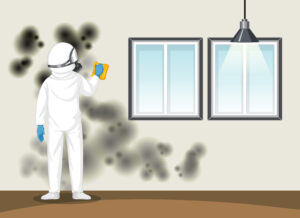
Report it in writing to your landlord as soon as you notice it. Keep copies of every communication. If the landlord does not respond within a reasonable time, contact your local council’s environmental health team.
Landlord entering without notice
Send an email stating that you require at least 24 hours’ written notice before any visit. If it continues, report it to your Students’ Union. Repeated unannounced entry can constitute harassment.
Deposit deductions at the end of tenancy
Use the free dispute resolution service offered by whichever deposit protection scheme holds your money. The adjudicator looks at evidence from both sides and your move-in photos are your strongest asset here.
Housemate not paying their share
In a joint tenancy this becomes your problem too. Have the conversation early rather than letting arrears build up. Get advice from your SU before agreeing to anything about a departing housemate.
Repairs not being done
Report everything in writing and keep a log with dates. If nothing happens, contact your local council’s private rented sector team. From May 2026, landlords must join the new ombudsman scheme and can be complained about there too.
Frequently Asked Questions

Can my landlord still give me a fixed-term tenancy?
For most private tenancies in England starting from May 2026, fixed-term assured shorthold tenancies are no longer available. However, university-managed halls and most private PBSA are exempt and can still use fixed terms.
If you are signing with a private landlord or agent, your tenancy will generally be a rolling periodic one.
If a contract is presented to you as fixed-term, check with your SU housing adviser before signing as it may not be enforceable in the way the landlord suggests.
What happens if one of my housemates stops paying rent?
In a joint tenancy, all tenants are jointly and severally liable for the full rent. That means if one person stops paying, the landlord can pursue any or all of the remaining tenants for the shortfall.
This is one of the most serious practical risks of shared renting. Talk to your SU housing adviser immediately if a housemate is falling behind as the earlier you act, the more options you have.
How do I get my deposit back at the end of the year?
Your landlord should return your deposit within 10 days of you both agreeing on any deductions.
If you disagree with the amount they want to keep, use the free adjudication service run by whichever deposit protection scheme holds your money. You do not need a solicitor.
The adjudicator will compare the property’s condition at check-in and check-out using the evidence available, which is exactly why date-stamped move-in photos matter so much. If your deposit was never registered in a scheme, get advice from your SU immediately.
Frequently Asked Questions contd.
Are students exempt from council tax?
Full-time students are exempt from council tax, but it is not applied automatically.
You need to apply to your local council and provide proof of your student status, which is usually a letter from your university.
If your household is mixed with some students and some non-students, the non-students will be liable. Some councils offer a discount in this situation so check with your local council directly.
What can my landlord legally charge me for?
Under the Tenant Fees Act 2019, landlords in England can only charge rent, a refundable holding deposit of up to one week’s rent, a tenancy deposit of up to five weeks’ rent, and certain specific default charges such as late payment fees or key replacement costs.
They cannot charge admin fees, referencing fees, check-in fees, or any other upfront costs.
If a landlord or agent asks for anything outside this list, that is unlawful and you should report it to your local council’s trading standards team.
Can I leave my tenancy early if I need to?
On a rolling periodic tenancy (the standard type for most private lets in England from May 2026), you can generally leave by giving your landlord two months’ notice in writing at any time. You do not need to wait until the end of an academic year.
If you are in university-managed halls or PBSA on a fixed-term contract, there may be a break clause so check your contract or ask your accommodation office. In any case, it is worth speaking to your SU housing adviser before serving notice to make sure you follow the correct process.
Where to Get Help
| Resource | What it covers | Link |
|---|---|---|
| Your SU housing team | Personalised advice, contract checks, local landlord knowledge | Check your SU website |
| Shelter | Free expert housing advice, helpline, online chat | shelter.org.uk |
| Citizens Advice | Rights, disputes, repairs in plain English | citizensadvice.org.uk |
| Unipol | Accredited student properties and guidance | unipol.org.uk |
| GOV.UK private renting | Official guidance on rights and the Renters’ Rights Act | gov.uk/private-renting |
| Deposit Protection Service | Check and raise disputes on your deposit | depositprotection.com |
| mydeposits | Government-approved deposit protection scheme | mydeposits.co.uk |
| Tenancy Deposit Scheme | Government-approved deposit protection scheme | tenancydepositscheme.com |
| Rent Smart Wales | Renting guidance for students in Wales | rentsmart.gov.wales |
| mygov.scot | Renting guidance for students in Scotland | mygov.scot |
Always check current guidance directly before making decisions. Laws change and this guide reflects the position as of 2025/26. When in doubt, speak to your Students’ Union housing adviser.