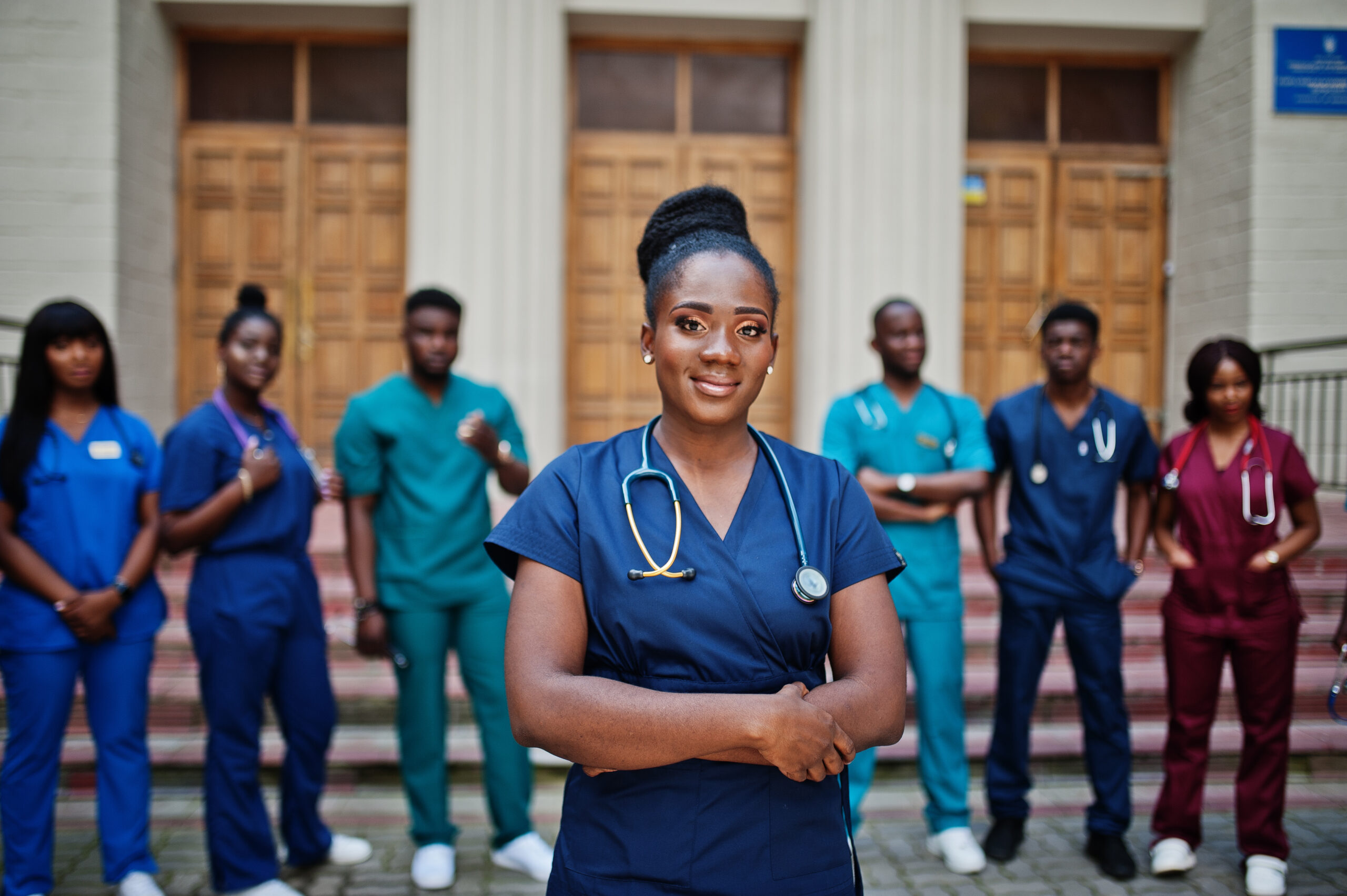
Health Care Careers for Africans in 2026: Global Pathways and Evolving Opportunities

Health Care Careers for Africans in 2026

In 2026, the global healthcare industry continues to evolve, opening new professional frontiers for Africans. The post-pandemic era has not only redefined workplace expectations but also increased demand for healthcare professionals worldwide.


From public health researchers in Europe to nurses in Canada and mental health clinicians in New Zealand, Africans are shaping health systems across borders.


As the international push for stronger health services grows, Africans with academic training, digital ability, and medical dedication are finding new pathways to work, learn, and contribute globally.


The rise of digital health, artificial intelligence in medicine, and cross-continental medical partnerships has made healthcare an inclusive and fast-expanding field.


Let’s explore how healthcare careers for Africans are transforming in 2026, what regions are at the forefront of this change, and what skills and programmes are supporting professionals who aspire to build global expertise.

Why Health Care Careers for Africans Are Expanding in 2026

The healthcare sector remains one of the most adaptive and essential sectors across the world. While ageing populations strain systems in Europe and North America, Africa’s young, ambitious medical workforce is bridging gaps abroad through international studies, exchange programmes, and remote health collaborations.


In addition, organisations such as the African Development Bank and Foreign Africa have been investing in youth skill-building and international partnerships.


According to , internship programmes that engage African university students with international institutions are strengthening research and policy capacity in areas such as health technology and social development.


Likewise, the pan-African organisation  actively promotes practical experience through development-focused internships.


Its initiatives include training in research, communications, and policy analysis—all crucial in healthcare advocacy and management. Consequently, these initiatives are positioning Africans as valuable contributors to global health innovation.

Health Care Career Paths for Africans in 2026

Healthcare as a career field is remarkably diverse, encompassing clinical, research, administrative, and technological roles. Africans entering or advancing their medical pathways in 2026 find opportunities in areas directly connected to the industry’s evolution.

Major Career Segments:

  • Clinical Medicine and Nursing: Traditional medicine, midwifery, and nursing remain valuable, especially as many countries expand hospital staffing post-pandemic.


  • Public Health: Global agencies and NGOs increasingly recruit professionals skilled in epidemiology, data analysis, and community health education.


  • Telemedicine and Digital Health: As health tech accelerates, Africans skilled in information systems and virtual consultations are supporting healthcare across borders.


  • Biomedical Research: Partnerships between Africa and Europe are strengthening biotechnology and vaccine research programmes.


  • Mental Health and Psychology: Awareness of mental wellness continues to rise worldwide, with demand for African-trained professionals working remotely or in global teams.
You can also explore...  Career Opportunities for African Graduates 2026: Global Jobs, Skills, and Pathways


  • Health Administration and Policy: Leadership and policy analysis roles are essential as countries aim to improve healthcare delivery and financing models.


These segments demonstrate how Africans can leverage both clinical knowledge and digital competence to participate in medical innovation.

Opportunities in Europe for African Health Professionals


Europe remains a leading destination for health professionals due to its structured training systems and demand for qualified staff.


African doctors, nurses, and therapists contribute to national health services in the UK, France, and Germany, where recruitment campaigns target internationally trained workers.


Furthermore, European funding models support postgraduate research fellowships, allowing African scientists to collaborate in medical and pharmaceutical projects.


For example, Germany’s DAAD programmes and France’s Foundations for Global Health Studies allow postgraduate scholarships in biomedical engineering and global health management.


African-trained professionals often benefit from the cultural sensitivity and adaptability valued in diversified patient care teams. However, these opportunities also demand compliance with regional medical licensing and demonstration of continuous learning through accredited medical education.

Opportunities in Asia for African Health Professionals

Asia’s focus on biomedical technology and public health collaboration has made it another hub for medical opportunities. Countries like China, Japan, Singapore, and South Korea have established partnerships with African health institutions to encourage training exchanges and joint research in tropical medicine and infectious diseases.


For instance, Singapore’s university hospitals continue to offer positions to international health analysts and technology consultants who bridge data-driven medicine with clinical care. Likewise, Japan’s health innovation councils fund selected projects where African researchers share insights on climate-linked disease prevention and genetic health studies.


In these countries, internships and technical fellowships allow participants to engage with advanced healthcare systems that blend robotics, AI, and patient data tracking, providing Africans with a global perspective on digital diagnostics.

Opportunities in North America for African Health Professionals

North America stands out as a destination for long-term career development within healthcare. The United States and Canada host a growing number of African medical graduates pursuing postgraduate residencies, caregiving roles, and research assistantships.


Canada in particular remains a magnet for nurses, lab technicians, and public health professionals looking for structured pathways to practice licensing. Universities and hospitals across the provinces coordinate with global innovators to provide mentorship and clinical placements.


Meanwhile, public health organisations in the US continue to run global health programmes linked with African universities. These collaborations support field research in tropical and non-communicable diseases, reflecting transcontinental knowledge exchange.


African professionals exploring medical careers in North America benefit from gaining exposure to cutting-edge technologies, multi-disciplinary teams, and international hospital standards.

Opportunities in Australia and New Zealand for African Health Professionals

Australia and New Zealand maintain strong healthcare systems and regularly invite international professionals to fill specialised roles in nursing, allied health, and medical science.


Africans entering these markets often pursue postgraduate scholarships or employer-sponsored visas that match their qualifications.


Both nations also prioritise community health and rural outreach, making them ideal for professionals interested in social impact healthcare.


Programmes in rehabilitation, aged care, and indigenous health represent growth sectors where African professionals can apply cultural competence and innovation.


Continuous professional development and globally recognised certifications assist in career advancement, and many African-trained practitioners are engaged in collaborations that improve strategies for remote and digital health delivery.

Emerging Health Disciplines for Africans in 2026

The healthcare landscape is rapidly changing, influenced by technology, demographic shifts, and policy reform. Africans entering the field are embracing specialisations suited to new systems of care.

You can also explore...  NHS Jobs in the UK for Africans 2026: Opportunities, Pathways, and Real Insights

Emerging Areas Include:

  • Health Informatics: Combining IT and health sciences to manage digital patient data securely.


  • Genomic Medicine: Supporting personalised diagnostics using data from diverse populations.


  • Global Health Security: Participation in disease surveillance and epidemic monitoring efforts.


  • Pharmaceutical Research Management: Coordinating medical trials and product development.


  • Medical Device Innovation: Creating accessible health technologies tailored for diverse communities.


  • Rehabilitation and Occupational Therapy: Addressing recovery support for chronic illness and post-surgery treatment.


  • Nutrition and Preventive Care: Focusing on wellness education and non-communicable disease prevention.


These evolving disciplines allow African practitioners to lead in the balance between community-based and high-tech healthcare solutions.

Global Comparison of Health Care Careers for Africans

The following table outlines how opportunities differ across continents according to skill area and focus.

Region Major Roles Available Key Sectors Notable Features
Europe Doctors, researchers, specialists Hospital care, ageing population care Regulated licensing, funded postgraduate research
Asia Analysts, tech-based practitioners Telehealth, medical innovation Technological integration and bilateral projects
North America Nurses, public health officers, professors Clinical training, laboratory research Multicultural environments and digital hospitals
Australia & NZ General practitioners, therapists Rural health, aged care Work-life balance and community health incentives
Africa (Regional) Researchers, administrators, students Policy, education, telemedicine Rising digital health hubs and professional exchanges


This snapshot illustrates that healthcare work for Africans in 2026 is no longer bound by physical location but by global collaboration and continuous skill development.

How to Prepare for Global Health Care Careers

Preparation for a global healthcare career demands a balance between clinical expertise and adaptable professional skills. Africans intending to join international networks must continuously upskill to remain competitive.


Steps to Prepare for International Opportunities

  • Pursue recognised qualifications: Choose medical or allied health programmes that include internationally accredited curricula.


  • Improve language proficiency: English, French, or local host-country languages strengthen professional communication.


  • Gain practical experience: Volunteer in hospitals or community-based health centres to build experience portfolios.


  • Seek mentorship: Network with alumni and organisations that align with your field.


  • Stay digitally informed: Learn health tech tools such as electronic patient records systems and data analytics software.


  • Understand regulatory requirements: Research licensing requirements in target countries ahead of time.


  • Apply for internships and exchanges: Collaboration programmes like those hosted by Afreximbank and Foreign Africa often overlap with healthcare policy or technology initiatives, contributing real-world expertise.

The Role of Internships and Scholarships in Health Career Development


Internships play a vital role in transitioning from academics to professional settings. Institutions like the African Development Bank offer policy internships that expose applicants to socioeconomic research and data environments relevant to healthcare systems .


Similarly, Foreign Africa provides structured development internships that cultivate analytical and communications skills essential for managing healthcare projects .


Both examples illustrate how strategic exposure enhances professional readiness for Africans entering global public health and medical research careers.


Many universities and UN agencies also integrate scholarships and research placements tied to health disciplines. Through projects under the United Nations Development Programme and similar networks, young Africans can participate in initiatives supporting digital health and sustainable health systems.

Challenges in Building Health Care Careers Globally

While healthcare is increasingly accessible as a career, Africans face both structural and personal challenges when pursuing international opportunities.

  • Regulatory Barriers: Licensing requirements differ across regions, often requiring new examinations and accreditation recognition.
You can also explore...  Global scholarships for international students 2026 guide to study abroad options


  • Financial Costs: Application fees, processing costs, and relocation expenses can be significant for applicants.


  • Cultural Adjustments: Navigating new work cultures demands patience, adaptability, and emotional intelligence.


  • Workload Pressures: Long working hours, particularly in clinical settings, can challenge work-life balance.


  • Health System Complexity: Understanding administrative layers in foreign systems requires ongoing orientation and mentorship.


Despite these challenges, growing partnerships between African institutions and global networks are simplifying training and recognition processes, gradually improving accessibility for qualified professionals.

Future Outlook of Health Care Careers for Africans

The future of healthcare careers for Africans looks increasingly promising as global health systems continue to expand and modernise.

In 2026 and beyond, healthcare will rely more heavily on digital technology, international collaboration, research innovation, and patient centred care.

As a result, African healthcare professionals are expected to play an increasingly important role across hospitals, research institutions, public health organisations, rehabilitation centres, and global healthcare programmes.

In addition, the growing use of artificial intelligence, telemedicine, health data systems, and digital patient management is creating new opportunities beyond traditional clinical roles.

Africans with skills in healthcare technology, medical administration, health communication, research, finance, and data analysis will find increasing demand in both local and international healthcare environments.

At the same time, global healthcare systems continue to face workforce shortages, ageing populations, mental health pressures, and rising public health concerns. These challenges have increased demand for skilled, adaptable, and culturally aware professionals who can work effectively within diverse healthcare settings.

However, african healthcare workers are widely recognised for their resilience, flexibility, strong work ethic, and ability to perform under pressure, qualities that remain highly valuable in modern healthcare systems.

Furthermore, international training partnerships, exchange programmes, internships, and scholarship opportunities are helping more African professionals gain global exposure and specialised experience.

These pathways not only improve individual career prospects but also strengthen healthcare systems across Africa through knowledge transfer and professional collaboration.

Finally, the future of healthcare careers for Africans will be shaped by continuous learning, technological adaptability, professional ethics, and global cooperation.

As healthcare becomes more connected and innovation driven, African professionals will continue contributing meaningfully to improving patient care, advancing medical research, and building stronger and more inclusive health systems worldwide.

Conclusion: Beyond Borders, Towards Better Health

Overall, healthcare careers for Africans in 2026 reflect a growing global recognition of the value, expertise, and contribution of African professionals within the international health sector.

Across hospitals, laboratories, universities, NGOs, research centres, and digital health platforms, Africans are increasingly helping shape healthcare systems that are more inclusive, innovative, and responsive to modern challenges.

Furthermore, the continued expansion of scholarships, exchange programmes, internships, and international professional development opportunities is creating stronger pathways for African healthcare workers to gain advanced knowledge, global experience, and specialised skills.

Consequently, these opportunities allow professionals not only to grow individually but also to contribute positively to healthcare improvement within their communities and across the wider world.

At the same time, the future of healthcare will depend heavily on collaboration, adaptability, and cultural understanding. Therefore, as diseases, climate related health issues, and technological changes continue to affect global populations, healthcare systems require professionals who can work effectively across borders, communicate with diverse populations, and respond to rapidly changing medical demands.

Nevertheless, challenges such as migration barriers, workforce shortages, funding limitations, and unequal access to healthcare resources still exist. However, African healthcare professionals continue to demonstrate resilience, compassion, and commitment within difficult environments.

As a result, their growing presence in international healthcare spaces highlights the importance of diversity, shared expertise, and global cooperation in building stronger health systems.

To sum it up, healthcare continues to prove that talent, dedication, and human care are not limited by nationality or geography. Therefore, as African professionals continue to expand their influence across the global health sector, they are not only building successful careers but also helping create a healthier, more connected, and more equitable future for people around the world.

Leave a Comment